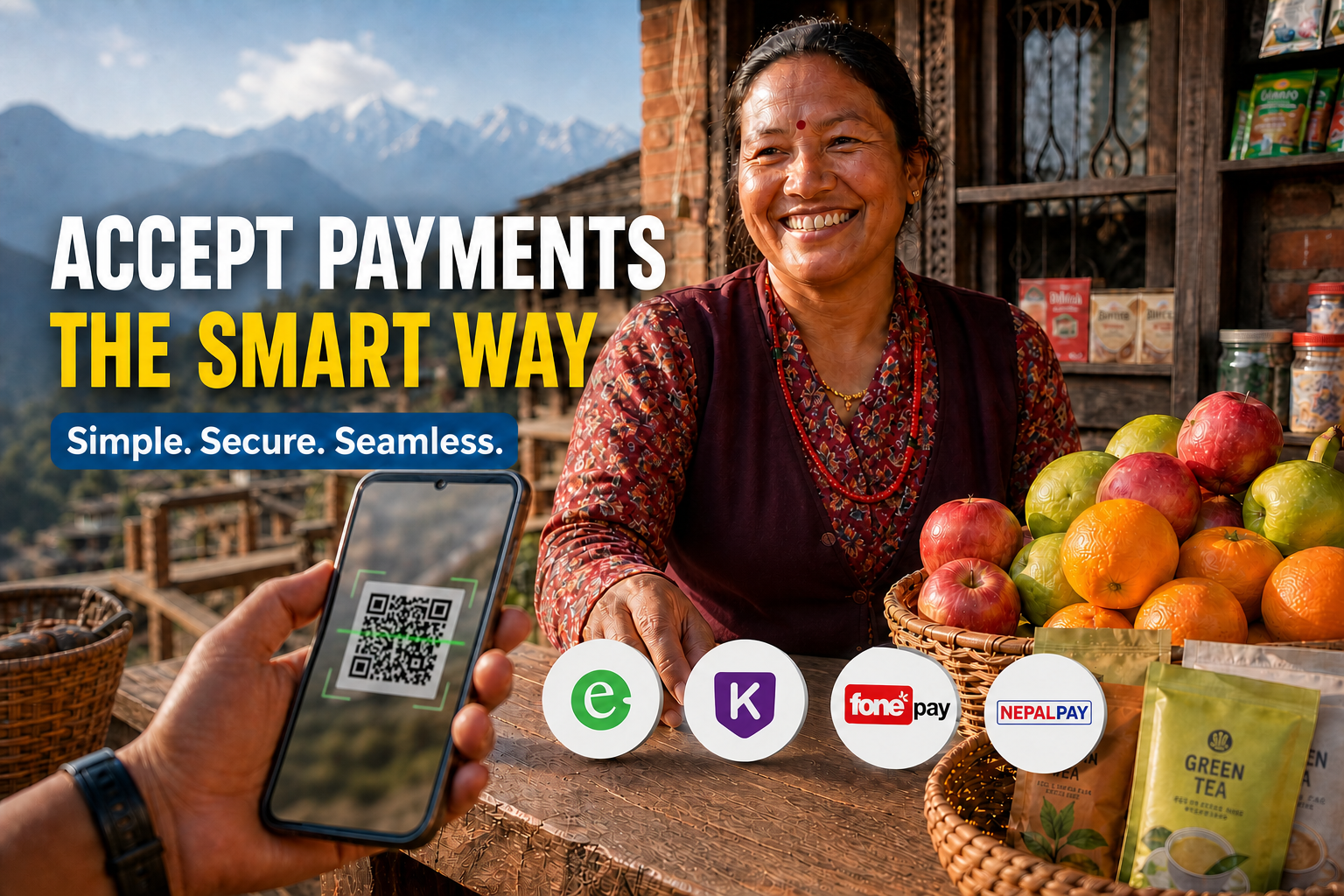

Imagine walking into a small tea stall in a mountain village.
You drink a warm cup of sweet tea. When it is time to pay, you do not pull out paper rupee notes. Instead, you scan a small printed code with your mobile phone.
The payment goes through in two seconds. The shop owner hears a chime on his phone, smiles, and nods.
Digital wallets in Nepal have changed from a city convenience into a daily tool across the entire country. From busy streets in Pokhara to remote corners in Jumla, cash is no longer the only way to pay.
Let us look closely at how digital wallets in Nepal work, who the key players are, and why this tech is helping rural economies grow.
1. The Early Pioneers: How It All Started
Before smartphones were common, paying electricity bills in Nepal meant standing in long queues for hours.
eSewa started in 2009 to solve that exact problem. It was the first digital wallet in the country. It let people pay utility bills, buy bus tickets, and recharge mobile balance directly from a computer or basic phone.
For almost eight years, eSewa was the main digital wallet most people knew. It built massive trust across Nepal by creating local agent networks in small towns.
Then in 2017, Khalti entered the market. Khalti focused on clean mobile design, helpful customer service, and attractive cashback rewards. It quickly became a favorite among college students and young professionals.
Khalti also made it easy to buy movie tickets, pay school fees, pay utility bills, buy bus tickets and book domestic flights online.
2. The Big Merger: Khalti and IME Pay Join Forces
For years, IME Pay was another giant in the market.
IME was already a household name in Nepal because of its money transfer business. Millions of families relied on IME to collect money sent home by relatives working abroad. IME Pay turned that physical remittance network into a digital wallet app.
Recently, the fintech industry saw a massive move: the merger of Khalti and IME Pay.
[Khalti's Tech & Youth Appeal] + [IME Pay's Vast Remittance Network]
= One of Nepal's Largest Digital Payment Systems
This merger creates a payment platform with millions of active users. It allows rural families to receive foreign remittances and spend that money digitally without ever visiting a bank branch.
This consolidation proves that the market for digital wallets in Nepal is growing stronger and more mature.
3. Other Popular Digital Wallets in Nepal
The digital payment market has plenty of healthy competition. Besides eSewa and the Khalti-IME Pay network, several other platforms serve specific needs across Nepal.
Other Digital Wallets in Nepal
- Prabhu Pay.
- CellPay
- Moco Digital Wallet
- MyPay
- Citi Pay
- Namaste Pay
To understand more about the regulatory rules governing these apps, you can visit the official Nepal Rastra Bank portal.
4. The QR Code Battle: Fonepay QR vs. Nepal Pay QR
If you walk into any Nepali grocery store, you will likely see QR stands on the front desk. Two main networks lead this space.
       ┌────────────────────────────────────────────────────────┐
       │               Nepal's Two Main QR Networks             │
       ├──────────────────────────┬─────────────────────────────┤
       │       Fonepay QR         │        Nepal Pay QR         │
       ├──────────────────────────┼─────────────────────────────┤
       │ • Private network        │ • Backed by NCHL / NRB      │
       │ • Huge private retail base│ • Popular in public offices │
       │ • Wide merchant reach    │ • Unified national standard │
       └──────────────────────────┴─────────────────────────────┘
Fonepay QR
Fonepay is a payment network operated by F1Soft International. It is not a wallet itself. Instead, it connects banks and wallets together.
When a shop puts up a Fonepay QR stand, customers from almost any mobile banking app can scan and pay. This simple setup made Fonepay popular among tea shops, restaurants, and retail stores across the country.
Nepal Pay QR
Nepal Pay QR is the national QR scheme operated by Nepal Clearing House Limited. Because it has direct backing from Nepal Rastra Bank, it serves as an open and standardized payment network.
You will see Nepal Pay QR widely used at government offices, traffic police fine counters, hospitals, and local cooperatives. It lets users pay using various bank apps and digital wallets without extra friction.
Both networks are competing to sign up local merchants. This competition gives customers more ways to pay without holding cash.
5. The Hidden Engine: NCHL, ConnectIPS, and Corporate Pay
Most people only see the digital wallet on their phone screen. But behind every transaction, there is a strong digital highway that makes money transfer possible.
That highway is operated by Nepal Clearing House Limited (NCHL). NCHL is supported by the central bank and commercial banks of Nepal. It runs two vital systems:
                      ┌───────────────────────────┐
                      │           NCHL            │
                      │  (The Digital Backbone)   │
                      └─────────────┬─────────────┘
                                    │
           ┌────────────────────────┴────────────────────────┐
           ▼                                                 ▼
   ┌───────────────┐                                 ┌───────────────┐
   │  ConnectIPS   │                                 │ Corporate Pay │
   │ (Person/Bank) │                                 │ (B2B / Payroll│
   └───────────────┘                                 └───────────────┘
ConnectIPS: Direct Bank-to-Bank Transfers
ConnectIPS lets you move money directly from one bank account to another in real time.
You do not need to load money into an intermediate wallet balance first. You simply link your bank account once. Then, you can transfer money, pay taxes, and pay credit card bills with very low service charges.
Many mobile banking apps actually run on ConnectIPS behind the scenes. It has become one of the most trusted ways to move large amounts of money safely.
Corporate Pay: Payments for Businesses
While wallets help single consumers, Corporate Pay is designed for companies, schools, and institutions.
It allows a business to make bulk payments with a single click. For example, a business in Pokhara can pay salaries to 100 staff members across Nepal in minutes. It also handles vendor payments, government taxes, and social security funds without paper cheques.
If you are a business owner, you can read our guide on digital tools for Nepali businesses to streamline your accounting.
6. Beyond Payments: New Products and International Support
Digital wallets in Nepal do not just pay electricity bills anymore. In recent months, they have launched powerful new products that connect Nepali merchants to the entire world.
       ┌────────────────────────────────────────────────────────┐       │            New Wallet Products in Nepal                │
       ├──────────────────────┬─────────────────────────────────┤
       │ 1. International QR  │ Receive cash from UPI & Alipay. │
       │ 2. Digital Loans     │ Borrow small cash with no paper.│
       │ 3. Micro-Insurance   │ Buy low-cost health/ride covers.│
       │ 4. Wallet Interest   │ Earn annual returns on balance. │
       │ 5. Stock Market IPOs │ Apply for shares via MeroShare. │
       └──────────────────────┴─────────────────────────────────┘
Receiving International Payments via Fonepay (UPI, Alipay, UnionPay)
One of the biggest breakthroughs in Nepal’s fintech space is cross-border payments.
Through the Fonepay network, local Nepali merchants can now receive direct digital payments from foreign tourists.
- UPI (India): Indian tourists and pilgrims can scan any Fonepay QR in Nepal using Indian apps like PhonePe, BHIM, or Google Pay.
- Alipay (China): Chinese tourists can scan Fonepay QR stands using their Alipay app to pay for food, hotels, and handicrafts.
- UnionPay International: Visitors carrying UnionPay-enabled apps can pay instantly across local retail counters.
When a tourist scans the code, the money converts automatically. The Nepali shop owner receives local Nepali Rupees directly in their linked bank account. This is a game-changer for hotels in Thamel, souvenir shops in Pokhara, and tea vendors in Lumbini.
[Indian / Chinese Tourist App] ──> [Scans Fonepay QR] ──> [Nepali Shopkeeper Gets NPR]Digital Micro-Loans (Instant Credit)
Getting a bank loan used to require physical collateral and weeks of paperwork. Now, apps offer instant digital micro-loans (such as Foneloan or wallet credit).
If you use your wallet regularly, the app tracks your good record. You can borrow small amounts—like Rs. 5,000 to Rs. 20,000—instantly with zero paper forms.
Micro-Insurance Plans
Wallets now sell bite-sized insurance plans for as low as Rs. 20 to Rs. 100. You can buy daily travel insurance, accidental injury protection, or ride-share insurance with a single tap inside apps like Khalti and eSewa.
Interest on Wallet Balances
Some digital wallets, such as Khalti by IME , allow users to earn interest on the money sitting in their wallet balance. This turns your digital wallet into a high-yield digital saving account.
Stock Market and Investment Services
Digital wallets in Nepal make stock trading fast and simple. You can handle your stock market payments directly from your phone:
- Load Broker Collateral: Add trading limits to your broker account in just a few seconds.
- Clear Buying Dues: Pay your stockbroker instantly after purchasing shares without writing cheques.
- Renew Accounts Online: Renew your MeroShare and Demat accounts every year with a single tap.
7. How Digital Wallets in Nepal Transform Rural Towns
The biggest benefit of digital payments is happening outside the capital city.
In past years, rural merchants had to travel hours by bus just to deposit cash into a bank branch. Today, a farmer selling apples in Mustang can receive payments on her phone instantly.
[Farmer Sells Produce] ──> [Buyer Scans QR] ──> [Money Lands in Bank] ──> [Instant & Safely]Here is why this matters for the rural economy:
- No more change shortages: Small shops often run out of small coins or 5-rupee notes. QR payments solve this issue completely.
- Protection from counterfeit notes: Fake currency can hurt small family shops. Digital payments remove that risk entirely.
- Clear sales history: Every digital transaction is stored on the phone. This helps shop owners track their daily profits easily.
- Safety from theft: Storing less physical cash in the drawer keeps small shops safer from burglary.
- Better credit access: When rural businesses build a digital transaction record, banks can check their real income and approve small business loans faster.
This progress supports financial inclusion in Nepal. It brings unbanked people into the formal financial system without requiring a physical bank building in every village.
8. Remaining Challenges in Going Fully Cashless
Even though progress is fast, Nepal still faces some real challenges on the road to a cashless economy Nepal desires.
┌─────────────────────────────────────────────────────────────┐
│                 Key Obstacles to Overcome                   │
├──────────────────────┬──────────────────────────────────────┤
│ 1. Weak Connectivity │ Internet drops cause failed payments.│
│ 2. Digital Literacy  │ Older users struggle with new apps.  │
│ 3. Merchant Fees     │ Small charges eat into low margins.  │
│ 4. System Glitches   │ Slow customer service creates worry. │
└──────────────────────┴──────────────────────────────────────┘- Internet issues: Mobile internet in remote hills can be slow or unstable. When the network drops during a transaction, both the buyer and seller face confusion.
- Digital literacy: Many elderly people and small vendors find smartphone apps hard to use. Simple local-language guides and hands-on training are still needed.
- Transaction charges: While many QR payments are free, some wallet transfers still carry service fees. For small merchants with thin profit margins, every rupee counts.
- Customer support delays: When a transaction gets stuck between a bank and a wallet, getting quick phone support can sometimes take too long.
Regulators and payment companies are working to solve these problems by setting up offline backup systems, lowering fees, and expanding optical fiber networks.
You can also check our simple personal finance tips for beginners to keep your money safe online.
The Road Ahead for Digital Wallets in Nepal
The shift toward cashless technology is steady and permanent.
More young people are using smartphones than ever before. With open payment networks, strong backup systems from NCHL, and healthy competition among wallets, digital payments will continue to spread deeper into rural communities.
For students, young professionals, and local business owners, using these tools is no longer optional. It is the fastest, safest, and smartest way to manage your hard-earned money.
Frequently Asked Questions
Which are the top digital wallets in Nepal right now?
The leading digital wallets include eSewa, Khalti by IME (with Khalti and IME Pay forming a major merged network). Other active wallets include CitiPay, Prabhu Pay, CellPay, Moco, and Smart Pay.
Is ConnectIPS the same as a digital wallet?
No. ConnectIPS is an interbank payment platform operated by NCHL. It connects your bank account directly to other banks, government portals, and payment apps without needing to store money inside an app wallet balance.
What is the main difference between Fonepay QR and Nepal Pay QR?
Fonepay QR is run by a private company and has the largest network in private shops and restaurants. Nepal Pay QR is operated by NCHL and backed by Nepal Rastra Bank, making it popular in government offices, cooperatives, and public utility counters.
Do I need a bank account to use digital wallets in Nepal?
No, you do not always need a bank account for basic features. You can open a wallet app with your mobile number and add cash through a local wallet agent or bank deposit from supported partner banks. However, linking a bank account unlocks higher transfer limits and lets you withdraw money directly.
What are the KYC requirements for digital wallets in Nepal?
KYC stands for “Know Your Customer.” Under Nepal Rastra Bank rules, users must upload a photo of their citizenship certificate, passport, or driving license. Completing KYC verification removes low spending limits and protects your account against identity fraud.
What happens if money is deducted from my wallet but the merchant does not receive it?
This is usually caused by a network delay. The money is safe in the payment settlement system. In most cases, the system cancels the failed order and returns the money automatically within 24 hours. You can also report the transaction ID directly to customer support.
How does the Khalti and IME Pay merger help normal customers?
The merger connects Khalti’s user-friendly mobile app with IME’s huge network of physical payout counters. This makes it easier to receive remittance funds from abroad and pay for local goods in a single app.
Are digital wallets in Nepal safe for everyday transactions?
Yes. All licensed payment providers follow strict cybersecurity guidelines set by Nepal Rastra Bank. They use device verification, two-factor authentication, and encrypted PIN codes. Donot Share and Always keep your OTP codes and passwords private to protect your money.
Can Nepali shopkeepers receive payments from Indian UPI apps?
Yes. Through the Fonepay network partnership with NIPL (India), Indian tourists can scan standard Fonepay QR stands in Nepal using apps like PhonePe, BHIM, or Google Pay. The merchant gets paid directly in Nepali Rupees.
Can Chinese tourists pay using Alipay or UnionPay in Nepal?
Yes. Fonepay has integrated with Alipay+ and UnionPay International. Chinese visitors and international travelers can scan merchant QR stands in Nepal using their home payment apps without carrying paper currency.