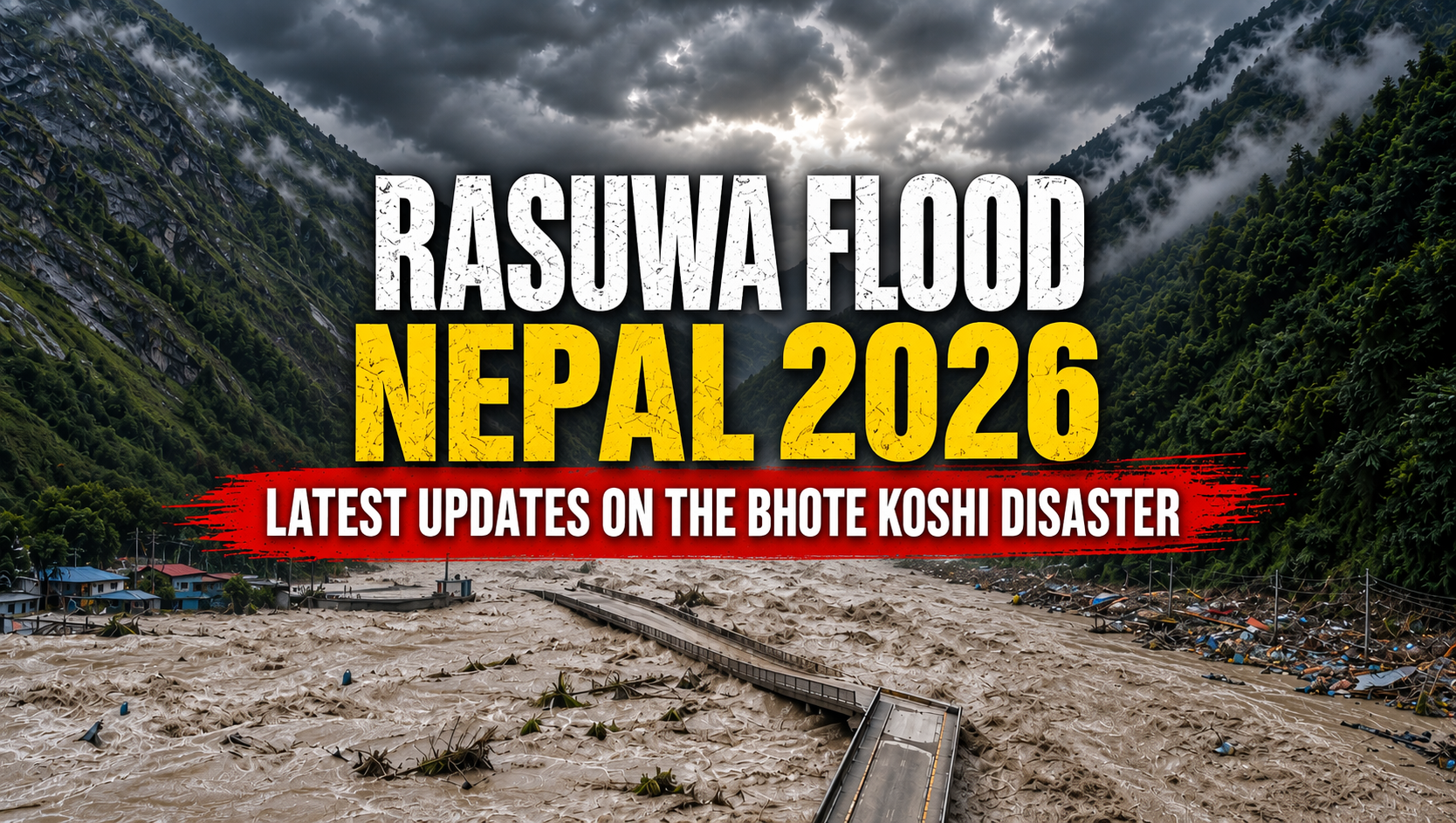

Note: All data in this report/article comes from verified situation updates released by the National Disaster Risk Reduction and Management Authority (NDRRMA), Nepal Police, and the National Emergency Operation Centre as of 27 August 2026. Search and rescue operations are actively taking place.
On the morning of 26 August 2026 (Bhadra 10, 2083), around 8:40 a.m., a sudden flash flood rushed down the Bhote Koshi River in Rasuwa district, northern Nepal.
There was no heavy rain in Rasuwa that morning. The sky was mostly clear. People were opening their shops, customs staff were clearing cargo, trekkers were preparing for walks in Langtang, and hundreds of pilgrims were on their way to sacred sites like Gosaikunda Lake and Mount Kailash.
The disaster started across the border in Tibet. A collapse of ice, rock, and a glacial lake roughly 20 kilometers northeast of the border sent a massive wall of water, mud, and boulders rushing down the Lhende Khola river into the Bhote Koshi.
Within a few hours, the water moved more than 150 kilometers downstream through the Trishuli and Narayani river systems. It affected eight districts: Rasuwa, Nuwakot, Dhading, Gorkha, Tanahun, Chitwan, and both East and West Nawalparasi.
As of 27 August, at least 165 bodies have been recovered, 826 people remain missing, and the main highway connecting Kathmandu to China is broken in dozens of places.
This article provides a clear, simple update on the Rasuwa flood Nepal — covering the missing pilgrims and trekkers, the destruction at Timure dry port, missing hydropower workers, rescue operations, and official bank accounts to send donations safely.
Table of Contents
Quick Summary of Key Numbers
Here is a quick look at the official numbers verified so far:
| Category | Official Figure / Status |
|---|---|
| Date & Time | 26 August 2026, about 8:40 AM |
| Main Rivers Hit | Lhende Khola, Bhote Koshi, Trishuli, and Narayani rivers |
| Bodies Recovered | At least 165 (some local field counts report up to 177) |
| Total Missing | 826 people |
| Missing Tourists & Pilgrims | 579 people (466 foreign visitors, 113 Nepali travelers) |
| Missing Security Staff | 85 personnel (44 Army, 28 Police, 13 APF) |
| Injured People | 41 to 73 people (receiving treatment in hospitals) |
| Rescued So Far | 300+ by helicopter, 104+ by ground teams |
| Bridges Broken | 35 motorable bridges, 45 suspension walking bridges |
| Roads Broken | About 40 kilometers along the highway corridor |
| Crisis Zone Status | Rasuwa, Nuwakot, and Dhading declared crisis zones for 3 months |
What Caused the Sudden Flash Flood?
Many people wondered how such a huge flood happened when there was no heavy rain in Nepal that morning.
Here is the simple step-by-step explanation:
- Ice-Rock Collapse in Tibet: High in the Tibetan mountains, a large mass of rock and ice broke loose from a mountain slope.
- Glacial Lake Breaks: The falling mass crashed into a natural lake formed by melting glacier water. The natural dam of loose dirt and rocks gave way.
- Debris Surge: Millions of liters of water rushed down the steep, narrow Lhende Khola canyon. As it moved, it tore up boulders, dirt, and trees from the riverbed.
- Enters Nepal: When the flood crossed the border into the Bhote Koshi, it was a heavy wall of mud and giant stones moving at high speed.
Because the river canyon in Rasuwa is very narrow, the water had no room to spread out. It rose high into the air and smashed into bridges, roads, and riverside buildings.
Hour-by-Hour Timeline
Wednesday, 26 August 2026
- 8:00 AM: Everything was normal. People opened shops, truck drivers waited at the Timure dry port, and travelers had breakfast in Syabrubesi.
- 8:40 AM: The sudden surge crossed from Tibet into Nepal through the Lhende Khola. It gave almost no time for anyone to run.
- 8:45 AM to 9:15 AM: The flood hit the Timure customs yard and the Rasuwagadhi border gate. Cargo trucks, containers, and buildings were swept away within minutes.
- 9:15 AM to 10:30 AM: The surge moved downstream to Syabrubesi, destroying riverside lodges, hotels, and walking bridges.
- 10:30 AM to 1:00 PM: The water entered Nuwakot and Dhading along the Trishuli River, flooding markets in Betrawati, Trishuli Bazaar, and Devighat.
- Afternoon: The flood reached the wider Narayani River, passing Gorkha, Tanahun, Chitwan, and Nawalparasi.
- Evening: Downstream police teams in Chitwan and other southern districts started finding bodies along the riverbanks.
Casualties: Where Bodies Have Been Found
Because the river was flowing with extreme force, it carried most victims away from Rasuwa and into the flat plains of southern Nepal.
Breakdown by District (at least 165 total):
- Chitwan: 64 to 65 bodies (the highest number, found near the Narayani River and barrages)
- Dhading: 27 bodies
- Nawalparasi (East): 26 bodies
- Gorkha: 20 bodies
- Nuwakot: 12 bodies
- Tanahun: 9 bodies
- Nawalparasi (West): 5 bodies
- Rasuwa: 2 bodies
Only 2 bodies were recovered in Rasuwa in the first 24 hours because the water swept victims downstream very fast. Additionally, deep mud and boulders buried buildings in Timure, meaning recovery teams have to dig through meters of debris before they can safely search collapsed structures.
Impact on Gosaikunda Pilgrims and Kailash Yatra Travelers
The timing of the Rasuwa flood Nepal made the human impact much worse. The disaster struck right in the middle of major religious journeys and mountain treks.
Of the 826 people missing, 579 are tourists and pilgrims (466 foreign visitors and 113 Nepali citizens).
1. Gosaikunda Lake Pilgrims
The flood happened just two days before Janai Purnima (28 August 2026 / Bhadra 12). During this sacred festival, thousands of Hindu and Buddhist devotees travel up through Rasuwa to take a ritual holy bath in the high-altitude Gosaikunda Lake (4,380 meters).
- Many devotees were traveling in local buses, jeeps, or resting in riverside lodges in Syabrubesi, Dhunche, and Betrawati.
- When bridges broke and landslides cut the highway, pilgrim groups were split up and stranded along remote walking trails without phone service or food.
2. Kailash Mansarovar Yatra Pilgrims
At the same time, large groups of pilgrims — especially from India and Nepal — were moving toward the Rasuwagadhi border to start or return from the Kailash Mansarovar Yatra in Tibet.
- The Rasuwagadhi–Kerung road is the primary overland route used by tour agencies for this holy pilgrimage.
- Many travel agencies, tour guides, and local porters were accompanying these groups in Timure and Syabrubesi when the flood arrived.
- According to the Nepal Tourism Board, a significant portion of the missing tourists were traveling toward Gosaikunda or Kailash Mansarovar through various travel agencies when the surge hit.
3. Langtang Valley Trekkers
Syabrubesi is also the starting point for the Langtang Valley trek. Many independent hikers, guides, and porters staying in riverside teahouses were caught when the water rose without warning.
The Tourist Police helpline (1144 or +977-1-4247041) is coordinating with foreign embassies to verify hotel registers and trek permits.
Damage at Timure Dry Port and Missing Drivers
The flood caused severe damage at the Timure customs yard and dry port near the Rasuwagadhi border:
- Vehicles Buried and Swept Away: A large number of newly imported vehicles, container trucks, and transport vans waiting at the dry port for customs clearance were swept into the river or buried under rock piles.
- Missing Transport Drivers: Many drivers who had traveled to Timure from different cities to collect and transport these vehicles to Kathmandu and other markets are now missing.
- Port Infrastructure Ruined: Customs offices, inspection sheds, and container parking lots were destroyed. The border crossing remains totally closed.
Hydropower Plants and Missing Shift Workers
The Bhote Koshi and Trishuli river valleys have multiple hydropower projects:
- Project Sites Flooded: Floodwaters carrying heavy sand and boulders entered project tunnels, water intakes, and powerhouse buildings.
- Missing Project Staff: Several workers, technicians, and security guards who were on duty for the morning shift at these project sites are still unaccounted for, according to local sources and project companies.
- Power Grid Damaged: Transmission poles and high-voltage power lines along the riverbanks were torn down, cutting off electricity to local communities.
Frontline Security Personnel Missing
A total of 85 security staff are missing:
- 44 from the Nepali Army
- 28 from the Nepal Police
- 13 from the Armed Police Force (APF)
These officers were stationed at border posts, customs gates, and security checkpoints along the river when the surge struck.
Damage to Roads, Bridges, and Border Crossings
The flood damaged essential transport links across northern Nepal:
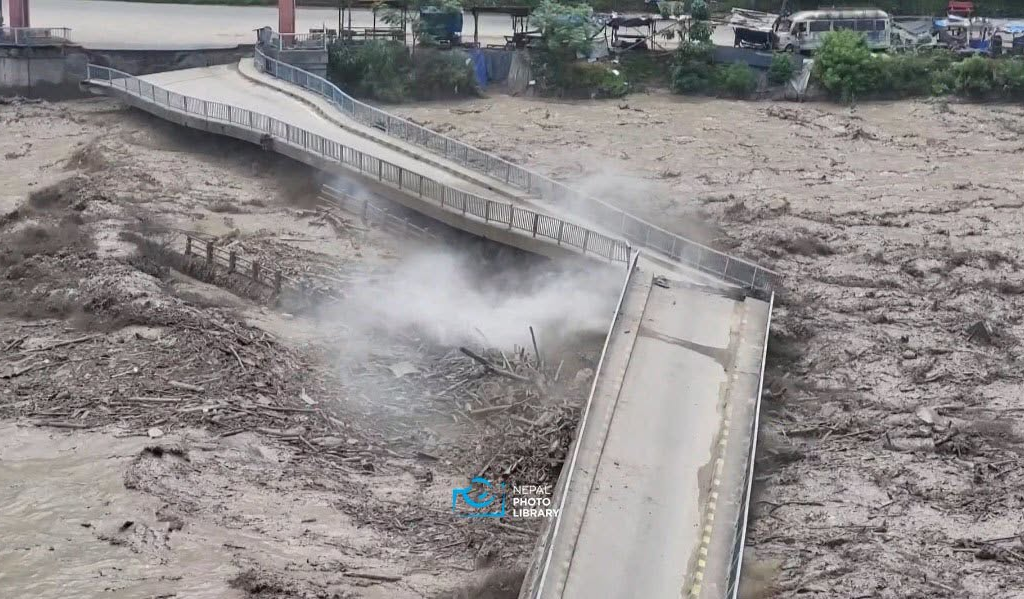
- 35 Motorable Bridges: Heavy steel and concrete bridges that carry big trucks across the river were destroyed or made unsafe.
- 45 Suspension Bridges: Walking bridges used by villagers and school children were torn away, leaving hillside communities cut off.
- 40 Kilometers of Highway: Long stretches of the Pasang Lhamu Highway (Kathmandu–Kerung road) collapsed into the river or were buried under landslides.
- Border Closed: The Rasuwagadhi border crossing with China is completely shut down.
Why Rescue in the Mountains Is So Hard
Rescue teams from the Nepali Army, Nepal Police, and Armed Police Force are working around the clock, but face major difficulties:
- No Road Access: Heavy machinery cannot drive to Timure or Syabrubesi because the road is broken in dozens of places.
- Bad Weather: Mountain clouds and rain frequently ground rescue helicopters.
- Deep Mud & Rocks: In Timure and Syabrubesi, the debris layer is several meters deep. Moving large boulders takes time.
- No Phone Signals: Damaged mobile towers and broken cables have made communication with cut-off villages very difficult.
- Ongoing Landslides: Unstable riverbanks and falling rocks continue to put rescue workers at risk.
Even with these problems, over 300 people have been airlifted to safety, and more than 104 people have been rescued by ground teams.
What the Government Is Doing ?
The Government of Nepal has announced several emergency steps:
- Three-Month Crisis Zones: Rasuwa, Nuwakot, and Dhading have been declared Disaster Crisis Zones for three months to speed up emergency spending and repairs.
- Free Medical Treatment: All government and university teaching hospitals have been ordered to provide free treatment and surgery to injured survivors.
- Financial Help for Families: Cash relief is being arranged for the families of those who lost their lives.
- Emergency Operations: The Ministry of Home Affairs is coordinating helicopters, food, clean water, and temporary shelter kits for displaced families.
PMO Nepal Facebook Page – (Click Here)
Official Appeal & Verified Bank Accounts for Donations
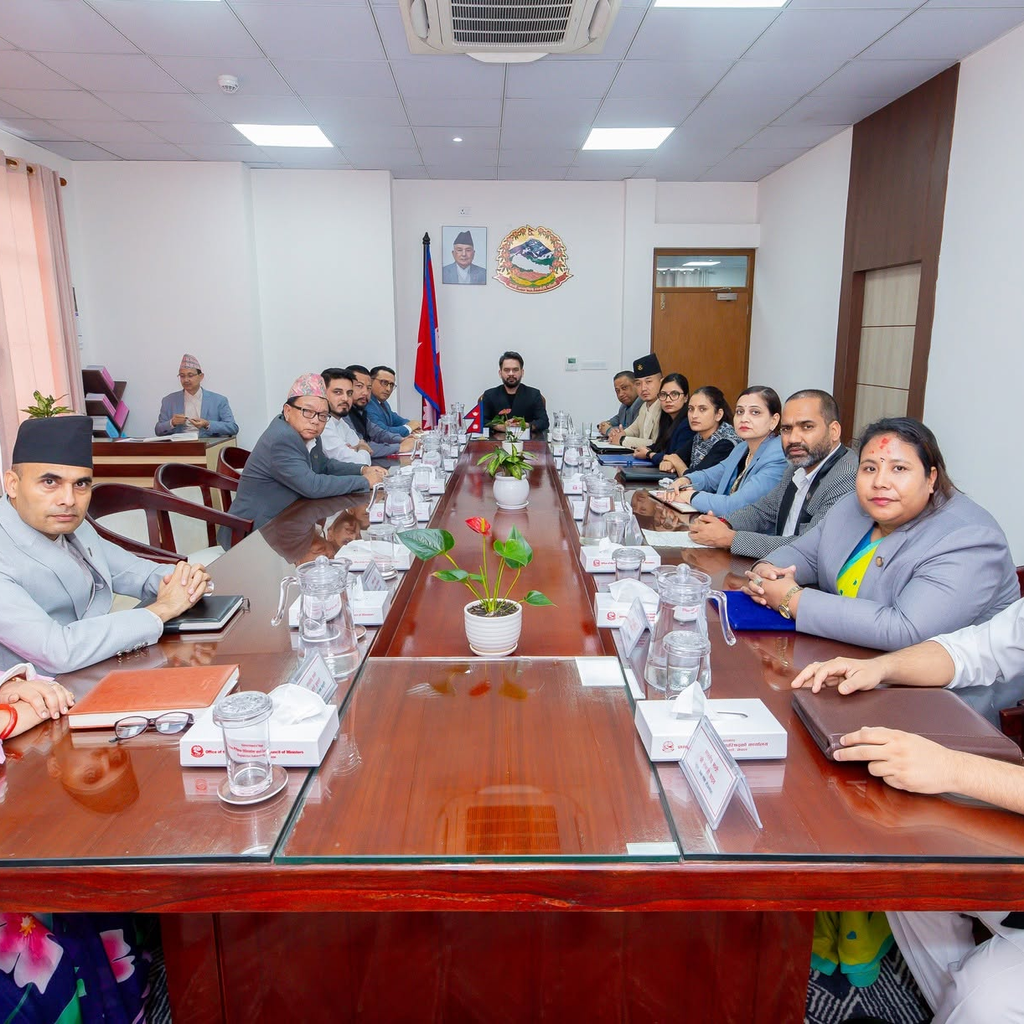
The Office of the Prime Minister and Council of Ministers has appealed to the public, businesses, and international well-wishers to contribute to official relief funds.

┌─────────────────────────────────────────────────────────────────┐
│                    IMPORTANT DONATION WARNING                   │
│                                                                 │
│  • DO NOT send money to personal bank accounts.                 │
│  • DO NOT scan random QR codes shared on social media.          │
│  • Send donations ONLY to the official government accounts.     │
│                                                                 │
│  Report fake donation drives to NDRRMA (01-4211197)             │
│  or dial Nepal Police at 100.                                   │
└─────────────────────────────────────────────────────────────────┘
Please use only these verified official government bank accounts:
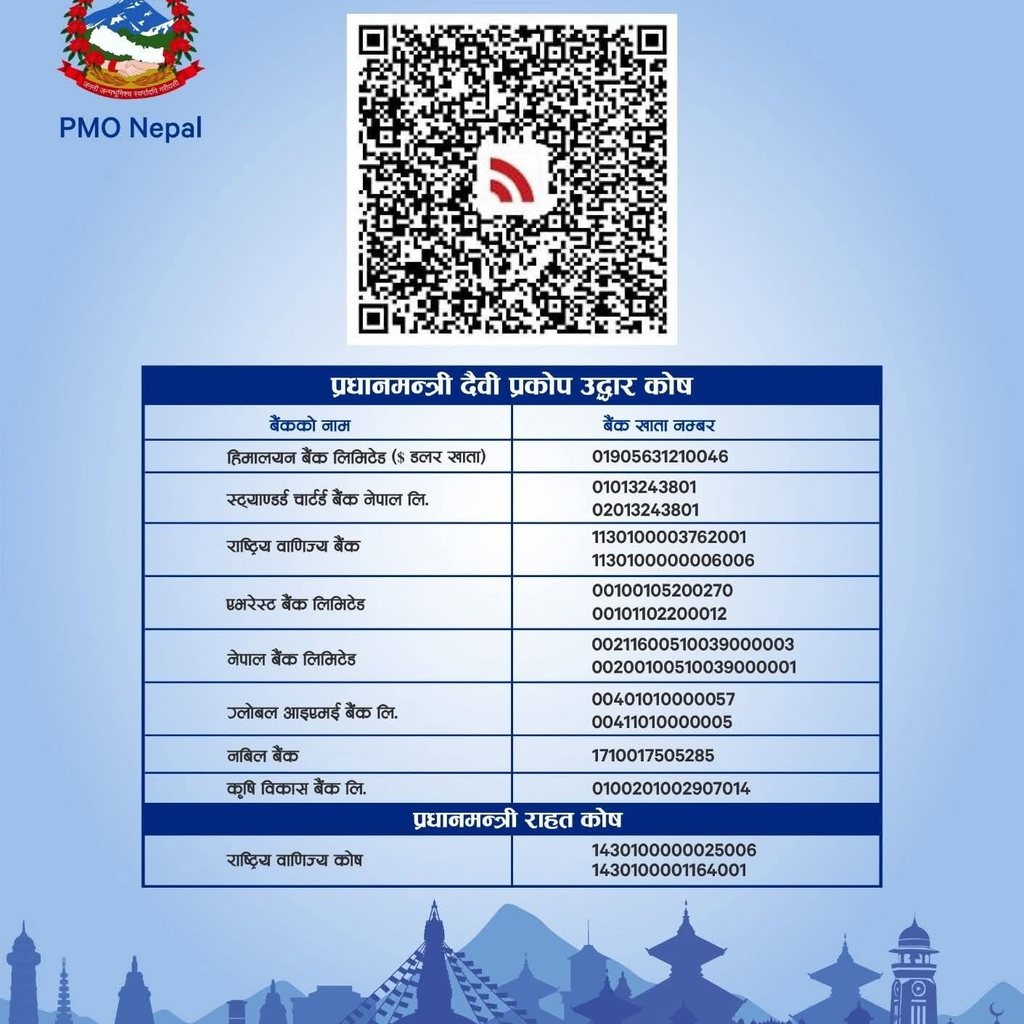
1. Prime Minister’s Disaster Relief Fund
(प्रधानमन्त्री दैवी प्रकोप उद्धार कोष)
| Bank Name | Account Number | Details |
|---|---|---|
| Himalayan Bank Limited | 01905631210046 | Foreign Currency (USD) |
| Standard Chartered Bank Nepal | 01013243801 / 02013243801 | Nepali Rupees |
| Rastriya Banijya Bank | 1130100003762001 / 1130100000006006 | NPR |
| Everest Bank | 00100105200270 / 00101102200012 | Nepali Rupees |
| Nepal Bank Limited | 00211600510039000003 / 00200100510039000001 | Nepali Rupees |
| Global IME Bank | 00401010000057 / 00411010000005 | Nepali Rupees |
| Nabil Bank | 1710017505285 | Nepali Rupees |
| Agricultural Development Bank | 0100201002907014 | Nepali Rupees |
Note: Rastriya Banijya Bank branches also provide an official QR code for mobile payments.
2. Prime Minister’s Relief Fund
(प्रधानमन्त्री राहत कोष)
| Bank Name | Account Number |
|---|---|
| Rastriya Banijya Bank | 143010000025006 / 1430100001164001 |
Emergency Helplines to Call
If you are looking for missing family members, pilgrims, or tourists, call these official numbers:

| Agency | Phone Number | Purpose |
|---|---|---|
| National Emergency Operation Centre | 1234 (Toll-Free) | Main disaster info and rescue requests |
| NDRRMA Control Room | 01-4211197 | Relief updates and reporting fake fundraisers |
| Nepal Police Control | 100 | Immediate police help & missing reports |
| Armed Police Force (APF) | 1114 | Disaster rescue coordination |
| Tourist Police Nepal | 1144 / +977-1-4247041 | Tracking foreign and domestic tourists/pilgrims |
| Nepal Red Cross Society | 01-4270650 | First aid, blood services, and family tracing |

Frequently Asked Questions (FAQs)
What caused the Rasuwa flood in Nepal?
The flood was caused by a large ice-rock collapse and glacial lake breach in Tibet, roughly 20 km from the Nepal border. The surge moved down the Lhende Khola into the Bhote Koshi. There was no heavy rainfall in Rasuwa at the time.
How many people have died?
As of 27 August 2026, at least 165 bodies have been officially recovered across eight districts, mostly downstream in Chitwan (64–65), Dhading (27), and Nawalparasi East (26).
Why were Gosaikunda and Kailash Mansarovar pilgrims affected?
The flood happened two days before the Janai Purnima festival, when thousands visit Gosaikunda Lake. At the same time, many pilgrims from India and Nepal were traveling toward the Rasuwagadhi border for the Kailash Mansarovar Yatra.
Why are drivers and workers missing at Timure dry port?
Timure is the primary customs clearance hub near the border. Hundreds of vehicles were parked there. When the flood arrived, vehicles were washed away, and many drivers and customs workers in the yard were caught in the surge.
Are hydropower workers missing?
Yes. Several power plants along the Bhote Koshi and Trishuli rivers were flooded. Workers on duty during the morning shift at these project sites are unaccounted for.
Is the highway to Rasuwagadhi open?
No. The road is completely closed. About 40 kilometers of road and 35 motorable bridges are broken.
What Needs to Happen Next ?
The Rasuwa flood Nepal shows how vulnerable mountain communities are to sudden upstream glacial events:
- Continue Search and Air Evacuation: Finding stranded pilgrims, tourists, workers, and locals remains the top priority.
- Install Temporary Bailey Bridges: Temporary bridges are urgently needed to restore emergency supply lines and bring in heavy equipment.
- Cross-Border Early Warning Systems: Nepal and China must set up automated sensor systems on high-risk glacial lakes in Tibet so downstream villages receive early siren alerts.
- Safer Infrastructure Planning: Future customs ports, hotels, and vehicle parking lots must be built away from narrow riverbeds.
This report is continuously updated with verified information from the NDRRMA, Nepal Police, and the National Emergency Operation Centre. For official help, dial 1234 or 100.